Age changes how a dog moves, sleeps, and eats. The stairs get slower, the walks get shorter, and the morning stiffness lasts longer than it used to. Owners of older dogs often start looking for anything that might ease the daily routine.
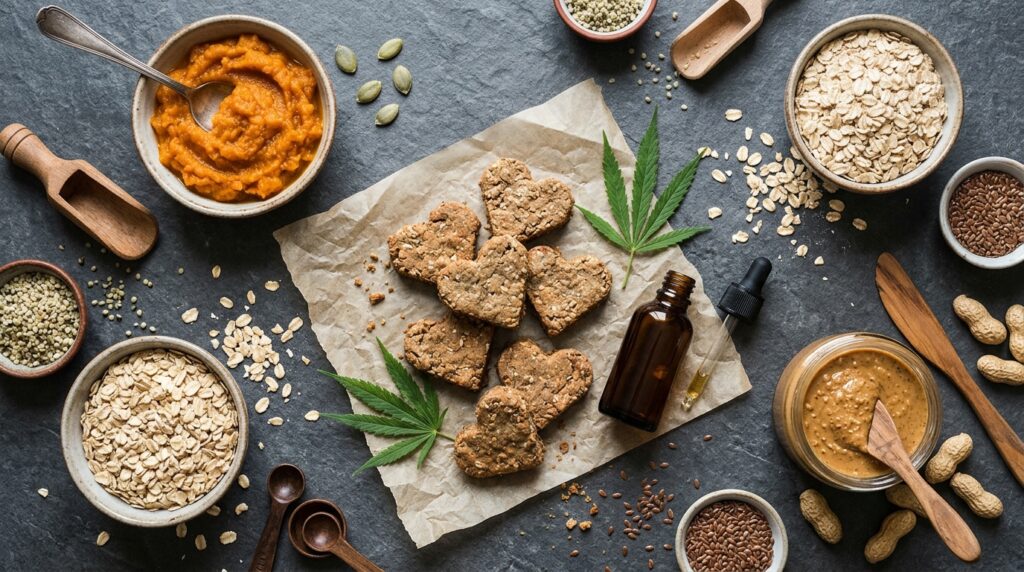
CBD dog treats are one of the products that come up in that search, mostly because pet shops and websites place them next to joint chews and calming aids. The evidence for them is thin, safety questions around older animals are real, and the right approach starts with a veterinarian’s view of the individual dog.
This article covers what ages a dog, what veterinarians already prescribe, how a hemp treat might fit into a senior routine, and which checks come first.
What Changes in an Aging Dog
Senior status arrives at different ages depending on size. Large and giant breeds are often treated as seniors around age 6 or 7, while small breeds usually reach that stage closer to 10 or 11. The American Animal Hospital Association’s canine life stage guidelines describe the senior stage as roughly the last quarter of a dog’s expected lifespan.
Joint Wear
Osteoarthritis is the most common reason older dogs slow down. Veterinary sources often estimate that about one in five adult dogs lives with the condition, and the share climbs with age and body weight. Signs include hesitation before jumping, stiffness after rest, licking at a joint, and reluctance to climb stairs or get into the car. Many owners read these as laziness or ordinary aging. A dog that suddenly stops using the couch is more likely hurting than bored.
Memory and Behavior
Canine cognitive dysfunction resembles dementia in people. A 2011 population study in The Veterinary Journal, led by Heather Salvin, found signs of the condition in roughly 28 percent of dogs aged 11 to 12 and roughly 68 percent of dogs aged 15 to 16. Typical signs are staring at walls, pacing at night, house soiling, and forgetting familiar commands. Treating these as normal aging delays an exam that could find treatable causes such as pain, thyroid disease, or kidney problems.
What Veterinarians Already Prescribe
Before any hemp treat enters the picture, the proven options deserve a look. Several carry regulatory approval and clinical trial data.
- NSAIDs made for dogs, including carprofen and meloxicam, which reduce pain and inflammation in arthritic joints
- Grapiprant, an anti-inflammatory the FDA approved in 2016 under the brand name Galliprant
- Bedinvetmab, sold as Librela, a monthly injection the FDA approved in 2023 for osteoarthritis pain in dogs
- Polysulfated glycosaminoglycan injections, sold as Adequan, which target joint cartilage
- Physical therapy, ramps, and non-slip rugs on slick floors
Weight control belongs on that list too, and the evidence for it is strong. A Purina-funded study published in the Journal of the American Veterinary Medical Association in 2002, led by Richard Kealy, followed Labrador retriever littermates for life. Dogs fed 25 percent less food lived a median of 13 years, compared with 11.2 years for dogs fed freely, and they developed arthritis later.
Nothing in the CBD literature has matched that kind of result. A hemp treat, if used at all, sits on top of this foundation and does not replace any of it.
Where a CBD Treat Might Fit
Some owners and veterinarians choose to trial a hemp-derived treat alongside the basics. A careful sequence looks like this.
- Book a senior exam that includes bloodwork covering liver and kidney values.
- Ask the veterinarian whether CBD makes sense given the dog’s current medications.
- Choose a product with a batch-matched certificate of analysis, a stated CBD amount per treat, and THC reported as non-detected or within legal limits.
- Follow the amount the veterinarian sets, since no standard treat dose exists.
- Keep a short daily log of mobility, appetite, sleep, and stool quality.
- Ask when to repeat liver values. The Cornell trial checked enzymes at two and four weeks.
Expectations should stay modest. The best-known trial, published in Frontiers in Veterinary Science in 2018 by Cornell University researchers, tested CBD oil at 2 mg per kilogram twice daily for four weeks in dogs with osteoarthritis. Owners and veterinarians scored improvements in comfort and activity. The trial was small, short, and used an oil, so the result does not automatically transfer to a baked treat with a few milligrams of CBD in each piece.
Bloodwork and Medication Checks
CBD is processed by cytochrome P450 enzymes in the liver, the same enzyme family that handles many veterinary drugs. In human medicine, CBD is known to inhibit some of these enzymes, which can raise blood levels of other medications. How much this matters at the low doses found in treats has not been well studied in dogs, so a veterinarian reviewing the full medication list is the safest route.
Older dogs often take several drugs at once: an NSAID, a thyroid supplement, heart medication, or gabapentin for nerve pain. Liver and kidney function shape how those drugs clear from the body. A baseline panel before starting CBD gives a reference point for later comparison.
One number deserves context. Alkaline phosphatase (ALP) rose in dogs in the Cornell trial. ALP also climbs with age, with steroid use, and with some liver conditions, so a single reading means little without the veterinarian’s interpretation. Dogs that already take NSAIDs usually get periodic bloodwork anyway, which makes it easy to fold CBD monitoring into the same visits.
Treat-Time Tips for Senior Dogs
Treat choice matters as much as the ingredient inside it.
- Softer textures are easier on worn teeth. The American Veterinary Dental College notes that most dogs show some sign of periodontal disease by age 3, so dental pain is common in seniors.
- Treats should stay under 10 percent of daily calories, a guideline veterinarians widely repeat. Count them toward the daily food total.
- Keep CBD treats in a separate container from regular treats so the dose stays accurate.
- Store the bag in a cool, dry spot, away from heat and sunlight.
- Offer the treat at the same time each day so changes in behavior are easier to read.
- Weigh the dog monthly. A pound or two matters on a small body.
Short FAQ
At what age are dogs considered seniors?
Roughly 6 to 7 years for large breeds and 10 to 11 for small breeds.
Can CBD replace arthritis medication?
No product has been shown to replace approved arthritis drugs. Any change to medication belongs with the veterinarian.
Do older dogs react differently to THC?
Dogs of any age are sensitive to THC, and seniors with other health conditions have less margin for error. THC-free or non-detected products reduce that risk.
How should a trial be judged?
A daily log kept over several weeks, reviewed with the veterinarian, gives a clearer picture than memory alone.
Final Thoughts
CBD dog treats have limited research behind them, and older dogs have the least room for guesswork. A veterinary exam, current bloodwork, and a lab-tested product come before the first treat.